Mrs. Bector's Food Specialities Ltd
A Ludhiana homemaker's 1978 kitchen recipes became national food infrastructure — a dual-engine biscuits, bakery and QSR-supply business that crossed Rs 2,000 cr.
PUBLISHED 21 JUL 2026
- Ticker
- BECTORFOOD
- Exchange
- NSE
- Sector
- FMCG — Biscuits & Bakery
- Market Cap
- ~₹5,800 cr
THE BEGINNING
A Homemaker, a Kitchen, and a Recipe That Wouldn't Stay Small
In 1978, in a home kitchen in Ludhiana, a homemaker named Rajni Bector turned a lifelong love of baking into a tiny enterprise. She had no formal culinary training, no business plan, and certainly no ambition to one day run an industrial food company. She simply made ice creams, breads, and biscuits that people around her loved — and word spread, first across the neighbourhood, then well beyond it. Cremica began on a simple foundation of quality, freshness, and taste.
For most people, that is where the story would have comfortably ended: a beloved home baker with a loyal local following. But demand kept outrunning the kitchen. Orders grew from friends to events to shops, and Rajni Bector kept saying yes, scaling up one oven and one recipe at a time. It is the most human kind of beginning — not a grand plan, just relentless quality meeting steadily growing demand.
Over the following decades, that home operation in Ludhiana grew into something Rajni Bector could scarcely have imagined at the start: an industrial food manufacturer. The formal company that carries her name, Mrs. Bector's Food Specialities, was incorporated in 1995, eventually building the brands Cremica and English Oven and becoming a key supplier to global quick-service restaurant chains in India.
That patience is the throughline of the entire company. The Bector family did not chase shortcuts or fashionable categories; they kept doing the fundamental thing — making food people trusted — and let scale follow quality rather than the other way round. It is a deeply unfashionable way to build a business, and precisely what makes the story worth telling.
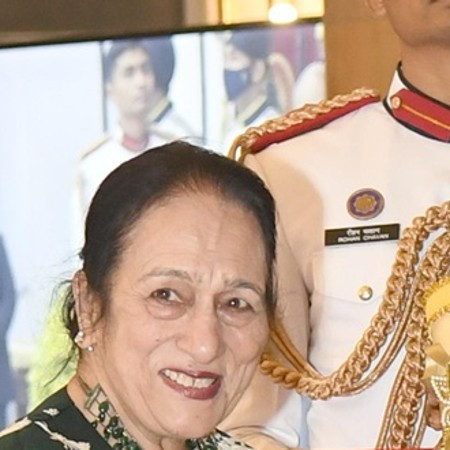
Rajni Bector began baking from her Ludhiana home kitchen in 1978 with no formal training. Across decades she turned locally famous recipes into an industrial food business — the foundation of brands like Cremica and English Oven and a key supplier to global quick-service restaurant chains in India.
IN PLAIN ENGLISH
What Does Mrs. Bector's Actually Do?
Picture two very different customers. One is a family in a supermarket aisle, picking up a packet of Cremica cream biscuits or a loaf of English Oven bread. The other is McDonald's, which needs tens of thousands of identical burger buns delivered to its outlets every single day, without fail. Mrs. Bector's sells to both.
So the company runs on two engines. The first is a normal consumer brand business — it bakes biscuits and breads and sells them to you in shops, under the Cremica and English Oven names. The second, and the more unusual one, is B2B (business-to-business) supply: it is the behind-the-scenes bakery for big restaurant chains, making the buns and bakery inputs they serve. You've almost certainly eaten its products without ever seeing its name — which is exactly how a good supplier makes money: quietly, in bulk, every day.
The Two Engines of Mrs. Bector's
One brand you can see on the shelf, one you can't
Mrs. Bector's makes the biscuits and bread you buy by name — and the burger buns you eat without ever knowing who made them.
THE TURNING POINT
When McDonald's Came to India and Knocked on Her Door
The defining moment arrived in the mid-1990s, when McDonald's entered India. A global quick-service giant entering a brand-new market needs something most consumers never think about: an utterly reliable, food-safe, consistent supply of buns, produced at scale to exacting specifications. McDonald's went looking for a local partner who could meet that bar — and found Mrs. Bector's.
It is difficult to overstate what this meant. A family food business from Ludhiana had to meet the quality, hygiene, and consistency standards of one of the most process-driven food companies on earth. Clearing that bar forced Mrs. Bector's to industrialise — to invest in food-grade plants, standardised processes, and the discipline of never shipping a bad batch.
That single relationship reframed the company. It was no longer just a maker of beloved biscuits and breads; it was an industrial supplier embedded in the supply chain of modern Indian quick-service dining — a category that was about to explode.
"It started with recipes, not a business plan. Everything else — the factories, the contracts, the scale — was built one careful batch at a time."
The Mrs. Bector's journey · from a Ludhiana kitchenTHE STRUGGLE
The Long, Unglamorous Climb From Kitchen to Factory
The romance of the McDonald's contract hides just how hard the underlying journey was. Taking a home kitchen to industrial food-grade production is a multi-decade grind, not a leap. It demands capital, process discipline, cold chains, quality systems, and the willingness to be audited and held to standards that leave no room for a single mistake.
Then there was the challenge of credibility. As a relatively small Indian manufacturer, Mrs. Bector's had to earn the trust of large institutional buyers who could not afford a single bad batch. B2B food is a business of reliability; one quality failure can end a relationship that took years to build.
And unlike a glamorous consumer brand, much of this work happened out of sight. There were no viral campaigns in the early decades — just the slow accumulation of capability, relationships, and reputation. The company was building the unglamorous machinery that would later let it scale into a multi-brand, multi-engine business.
THE MOAT
Why B2B Food Is a Quietly Powerful Business
Mrs. Bector's runs two engines. One is the consumer side — biscuits under Cremica and bakery products under English Oven, sold to households and retail. The other, and the more distinctive, is the B2B side: supplying buns and bakery inputs to quick-service restaurant chains. Understanding why that second engine is so valuable is the key to the whole business.
QSR supply is a moat built on switching costs. Once a chain like McDonald's qualifies a supplier — auditing its plants, validating its consistency, integrating it into a just-in-time supply chain — switching to a new vendor is risky and expensive. A bun has to be identical in every outlet, every day; a proven supplier is worth far more than a marginally cheaper unproven one.
It is also why B2B food businesses are often valued differently from pure consumer FMCG. The growth is tied to the expansion of the customers themselves — as QSR chains open more outlets across India, their qualified suppliers grow with them, almost automatically. Mrs. Bector's competes in a field where trust, not price, is the currency.
The Two Engines of Mrs. Bector's
A consumer brand business and an institutional supply business.
THE PUBLIC MARKETS MOMENT
A 198x IPO — The Market's Verdict on a Long Climb
In December 2020, Mrs. Bector's Food Specialities went public, and the market's response was emphatic: the IPO was subscribed roughly 198 times, making it one of the most heavily-subscribed offerings of the year. For a company whose roots trace to a 1978 home kitchen, this was a striking moment of validation.
The enthusiasm was not just hype. Investors were buying a rare combination: a recognised consumer brand business and a sticky, institutional B2B supply business, both riding the same long-term tailwinds in Indian food consumption. Few listed names offered exposure to the QSR supply chain with this kind of pedigree.
Going public also gave the company the capital and visibility to invest in capacity, distribution, and brand-building at a faster clip — fuel for the revenue compounding that followed. The IPO was less a finish line than a starting gun for the next chapter of an already long story.
When Mrs. Bector's listed in December 2020, its IPO was subscribed roughly 198 times — one of the most heavily-subscribed Indian offerings of the year.
THE NUMBERS
From a Home Kitchen to Over Rs 2,000 Crore
The financial trajectory tells the rest of the story. Mrs. Bector's has compounded its revenue steadily through the 2020s, growing roughly 19% to about Rs 1,624 crore in FY24, then to about Rs 1,874 crore in FY25, and crossing the Rs 2,000 crore milestone with about Rs 2,044 crore in FY26 — up around 9% year-on-year.
Revenue Growth (Rs Crore)
FY23 to FY26 · consolidated, rounded figures
~15% revenue CAGR (FY23—FY26), crossing Rs 2,000 cr in FY26What makes the numbers meaningful is their source. Growth is being driven by both engines — rising consumer demand for Cremica biscuits and English Oven bakery products, and the expansion of the QSR chains the company supplies. As India's quick-service restaurant footprint grows and packaged-food consumption rises, both engines have room to run.
WHY IT MATTERS NOW
Riding India's Quick-Service and Packaged-Food Boom
Mrs. Bector's is timely because the forces around it are accelerating. India's quick-service restaurant industry is in a multi-year expansion, with global and domestic chains racing to open outlets across smaller cities. Every new outlet needs the same reliable bakery inputs — and qualified suppliers grow automatically alongside the chains they serve.
On the consumer side, India's packaged-food and premium-bakery demand is rising with urbanisation and changing tastes. English Oven's premium bread and Cremica's biscuits sit squarely in that trend, giving the company a branded growth lever alongside its institutional business. The two engines partly hedge each other, too — consumer and B2B demand rarely move in perfect lockstep.
The longer arc is about a homemaker's recipes becoming national infrastructure. If India's QSR penetration and packaged-food consumption keep climbing toward the levels seen in more developed markets, a scaled, trusted, dual-engine supplier has a long runway. The risks are real — commodity input costs, competition, and margin pressure — but the structural tailwinds are rare and durable.
Mrs. Bector's is a reminder that some of the most durable businesses are built quietly, from the bottom up, by people who never set out to build an empire. Rajni Bector simply made food people loved and kept saying yes to more of it — and across nearly five decades that compounding of quality and trust turned a home kitchen into a two-thousand-crore enterprise embedded in the supply chain of modern India. The McDonald's contract didn't happen because of a clever pitch; it happened because the underlying quality was already there when opportunity came knocking. The deepest moats in food are not flavour or marketing but reliability — being the supplier no one ever has to worry about. Greatness, sometimes, is just consistency repeated for long enough.
Financial figures are sourced from publicly available information and may not reflect the most recent reporting period. This is a story, not investment advice — please verify all data independently before making any financial decision.
Like this story? You can get the next one.
If they're your kind of thing, we'll deliver one a week. No pressure, unsubscribe anytime.
No spam, ever. Leave whenever you like.